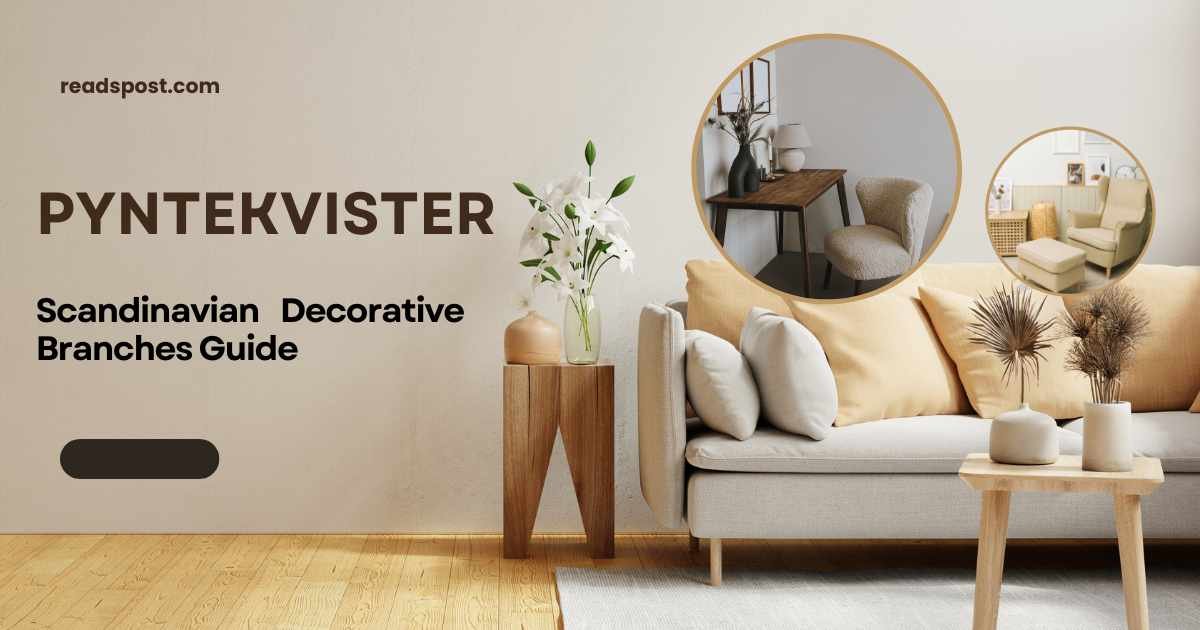
Pyntekvister: Scandinavian Decorative Branches Guide
INTRODUCTION
Pyntekvister is a refined Scandinavian interior décor concept that emphasizes the beauty of natural decorative branches as a central design element. Rather than relying on complex furniture or excessive ornamentation, Pyntekvister introduces elegance through simplicity. This approach reflects a growing global shift toward mindful living, where interiors are designed not just to look good, but to feel calm, balanced, and intentional.
In modern homes, décor is no longer only about trends—it is about creating environments that support mental clarity, comfort, and sustainability. Pyntekvister has emerged as a timeless solution that fulfills all of these needs.
WHAT IS PYNTEKVISTER / PYNTEKVISTE?
Pyntekvister is a term rooted in Scandinavian language and lifestyle, used to describe branches or twigs intentionally placed indoors for decorative purposes. These branches are typically natural, dried, or lightly treated and arranged in a minimalistic way.
The term Pyntekviste is often used as a singular or alternative spelling, but both words refer to the same décor concept. In design literature and lifestyle platforms, Pyntekvister is the most commonly recognized form.
MEANING AND TERMINOLOGY
| Term | Meaning |
|---|---|
| Pyntekvister | Decorative branches used in interior styling |
| Pyntekviste | Singular or alternative form of the same term |
SCANDINAVIAN DESIGN ROOTS
The foundation of Pyntekvister lies in Scandinavian design philosophy, which values:
- Natural materials
- Functional beauty
- Minimal visual clutter
- Harmony between indoor and outdoor spaces
Historically, branches symbolized seasonal change and renewal in Nordic cultures. Over time, this symbolism transformed into a modern interior design element that represents balance, simplicity, and respect for nature. Pyntekvister today carries both cultural depth and contemporary relevance.
WHY PYNTEKVISTER IS CONSIDERED A TIMELESS CONCEPT
Unlike trend-driven décor items that fade quickly, Pyntekvister remains relevant because it is rooted in nature. Natural elements do not go out of style—they evolve with how they are presented.
Pyntekvister stands out because it:
- Avoids over-decoration
- Encourages intentional design choices
- Adapts easily to different interior themes
- Supports long-term sustainability
- Feels modern without feeling temporary
This makes it suitable for both personal homes and professional environments.
DIFFERENT EXPRESSIONS OF PYNTEKVISTER
Pyntekvister can take many forms depending on interior goals:
- Raw natural branches for organic and earthy interiors
- Refined or painted branches for modern and monochrome spaces
- Light-enhanced branches for warm and ambient atmospheres
- Seasonally styled branches for subtle decorative updates
Each variation maintains the core principle of simplicity while allowing creative flexibility.
PYNTEKVISTER IN PRACTICAL INTERIOR USE
Spatial Balance
Tall branches create vertical emphasis, helping rooms feel taller and more open. This is especially useful in small or narrow spaces.
Visual Calm
Because branches have irregular, organic shapes, they soften rigid architectural lines and introduce a sense of natural flow.
Adaptability
Pyntekvister can be restyled multiple times without replacing the base décor, making it both economical and practical.
PYNTEKVISTER AS A DIY DESIGN ELEMENT
One of the most distinctive features of Pyntekvister is its accessibility. It does not require professional installation or expensive materials. Individuals can personalize their décor by selecting branches that resonate with their personal style.
DIY Pyntekvister encourages:
- Creativity without pressure
- Cost-effective decorating
- Reduced dependence on mass-produced décor
- A stronger emotional connection to living spaces
ENVIRONMENTAL AND WELL-BEING BENEFITS
Pyntekvister aligns closely with sustainable living practices. By using natural or reusable elements, it reduces waste and promotes environmental awareness.
From a psychological perspective, natural forms have been shown to:
- Reduce visual stress
- Improve focus and relaxation
- Create a sense of grounding indoors
This makes Pyntekvister particularly valuable in homes, offices, and creative workspaces.
PYNTEKVISTER IN MODERN LIFESTYLE PLATFORMS
Lifestyle websites such as Pyntekvister.com reflect how this concept extends beyond décor. The philosophy behind Pyntekvister influences:
- Home improvement ideas
- Minimalist living guides
- DIY culture
- Sustainable lifestyle content
As a result, Pyntekvister functions as both a design element and a lifestyle identity.
LONG-TERM VALUE OF PYNTEKVISTER
Pyntekvister offers long-term value because it does not depend on fast-changing trends. It can evolve with time while maintaining its core aesthetic. This makes it ideal for people who prefer thoughtful, lasting design rather than frequent redecorating.
CONCLUSION
Pyntekvister is more than decorative branches—it is a design philosophy centered on simplicity, nature, and balance. It brings calmness into interiors while offering flexibility, sustainability, and timeless appeal. In a world increasingly focused on mindful living, Pyntekvister stands as a powerful yet understated design choice.
Whether used in homes, offices, or lifestyle platforms, Pyntekvister represents a refined approach to modern interior design that values meaning over excess.
FAQs About Pyntekvister
What is the main idea behind Pyntekvister?
The main idea is to use natural branches to create simple, calming, and meaningful interior spaces.
Is Pyntekvister only for Scandinavian-style homes?
No. It works well with modern, minimalist, rustic, and even contemporary interiors.
Does Pyntekvister require frequent maintenance?
No. It is low-maintenance and can be reused for long periods.
Can Pyntekvister be customized?
Yes. It is highly adaptable and can be styled according to personal taste or seasonal themes.
Why is Pyntekvister considered sustainable?
Because it relies on natural, reusable materials and reduces dependence on artificial décor.
Disclaimer
This article is intended for informational and inspirational purposes only. The content reflects general interior décor and lifestyle concepts and should not be considered professional design or architectural advice. Any references to Pyntekvister or related platforms are for descriptive purposes only. Readers are encouraged to adapt ideas based on their personal preferences, space, and needs. The author assumes no responsibility for outcomes resulting from the application of this information.